
Borneo Wildlife Tours in Sabah: The Ultimate Guide for European Traveller
Discover the ultimate guide to Borneo wildlife tours in Sabah, specially written for European travelers seeking authentic rainforest adventures. From drifting along the legendary Kinabatangan River to exploring the untouched jungles of Danum Valley and searching for rare nocturnal animals in Deramakot Forest Reserve, this guide reveals what it truly feels like to experience Borneo’s wild heart. Blending first-hand storytelling with practical travel advice, readers will learn the best places to see orangutans, pygmy elephants, proboscis monkeys, and hornbills in their natural habitat. This comprehensive guide also covers the best time to visit Sabah, wildlife safari itineraries, travel tips, conservation insights, and what European visitors can expect when journeying into one of the world’s most ancient rainforests. Perfect for nature lovers, wildlife photographers, and adventurous travelers planning a once-in-a-lifetime Borneo wildlife safari.
lost borneo tours
2/27/20266 min read
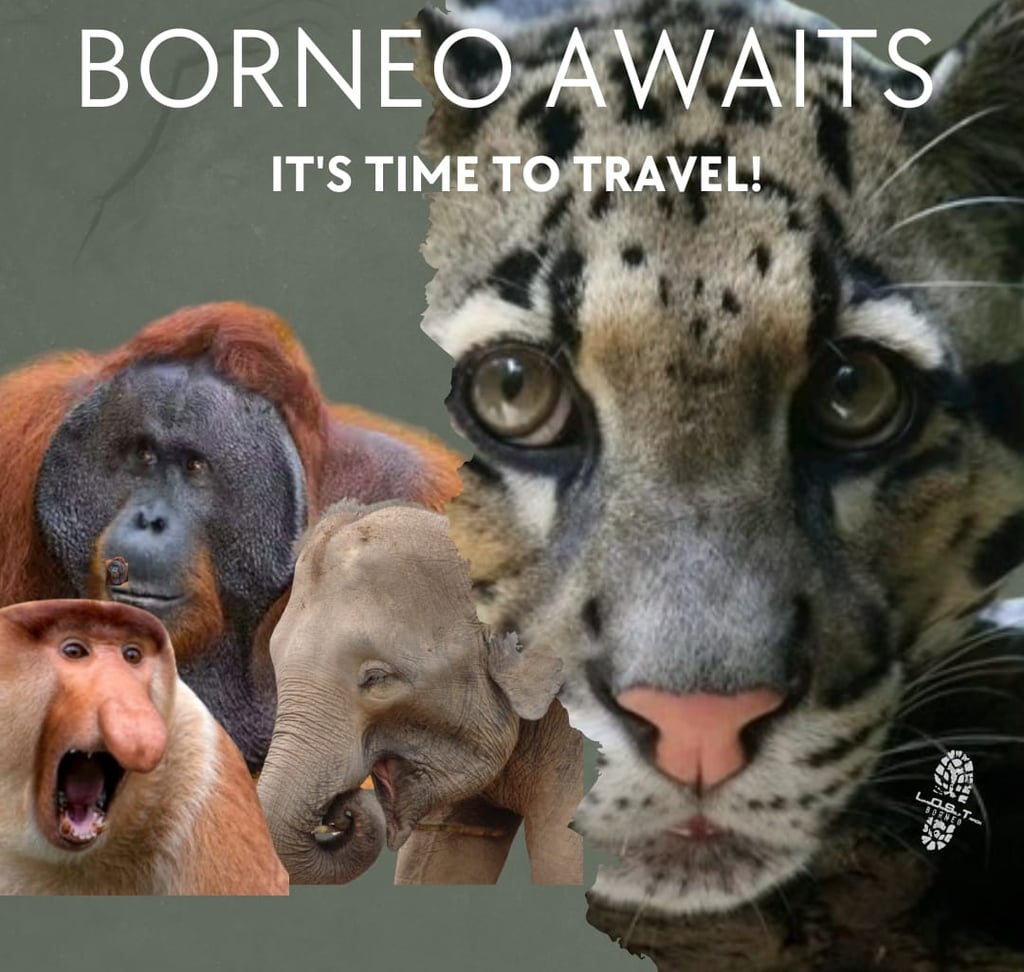
Borneo Wildlife Tours: The Ultimate Guide for European Travellers Visiting Sabah
Few places on Earth still feel genuinely wild. Sabah, located on the northern edge of the island of Borneo, is one of those rare frontiers where nature continues to dominate the landscape. Here, ancient rainforests rise like green cathedrals, rivers twist through dense jungle corridors, and wildlife moves through the forest with quiet authority.
For European travellers searching for something deeper than beaches and cities, Sabah offers one of the most profound wildlife journeys in the world. It is a place where mornings begin with the echoing calls of gibbons, where orangutans drift silently through the canopy, and where night safaris reveal creatures rarely seen anywhere else on Earth.
Those who come here quickly realize that Borneo wildlife tours are not just about ticking animals off a list. They are about immersion — stepping into an ecosystem millions of years old and witnessing nature in its rawest form.
This guide explores the landscapes, wildlife, and experiences that make Sabah the ultimate destination for European travellers seeking unforgettable rainforest adventures.
Why Sabah is the Best Wildlife Destination in Borneo
Borneo is shared by three countries: Malaysia, Indonesia, and Brunei. Yet among these regions, Sabah stands out as the most accessible and rewarding wildlife destination for travellers.
The Malaysian state has invested heavily in conservation and sustainable tourism. Vast rainforest reserves remain protected while carefully managed wildlife tours allow visitors to experience these environments responsibly.
A Rainforest Older Than the Amazon
Sabah’s jungles are not merely forests — they are living relics of prehistoric Earth.
Some areas of Borneo’s rainforest are estimated to be over 130 million years old, making them among the oldest ecosystems still surviving today. Walking through these forests, travellers often feel as if they have stepped back in time.
Towering dipterocarp trees stretch high above the canopy, their trunks wrapped in vines and moss. Sunlight filters through layers of leaves while the air hums with insects, birds, and unseen movement.
For European visitors accustomed to cultivated landscapes, the first encounter with Borneo’s jungle can feel overwhelming — in the best possible way.
A Sanctuary of Biodiversity
Borneo is considered one of the world’s biodiversity hotspots.
The island supports:
More than 15,000 plant species
Around 220 mammal species
Over 420 bird species
Thousands of insects, reptiles, and amphibians
Many of these species exist nowhere else on the planet.
But what truly makes Sabah special is that wildlife still thrives here in large numbers. While many tropical forests have disappeared elsewhere, Sabah continues to protect vast tracts of habitat where animals roam freely.
Kinabatangan River: Where the Jungle Comes to the Water
For many travellers, their first true wildlife encounter happens along the Kinabatangan River.
The river winds through eastern Sabah like a great brown artery, feeding floodplain forests that teem with life. Early morning mists hover above the water while longboats drift quietly along the banks.
From the boat’s narrow bow, the jungle appears endless.
Suddenly, movement.
A guide lifts his hand and whispers: proboscis monkey.
High in the branches, an orange -coloured figure slowly climbs between trees, pausing to look down at the river below.
Moments like this define the Kinabatangan experience.
Wildlife Along the Riverbanks
The Kinabatangan ecosystem compresses an extraordinary amount of wildlife into a relatively small corridor. Animals gather along the river to drink, feed, or travel through the forest.
During a single river safari, visitors may encounter:
Orangutans
Proboscis monkeys
Silver leaf monkeys
Long-tailed macaques
Monitor lizards
Crocodiles
Hornbills
Sometimes entire families of Bornean pygmy elephants emerge from the jungle, crossing the riverbanks in silent procession.
For European travellers accustomed to traditional safaris, the experience feels completely different. Instead of open plains, the forest hides its secrets carefully. Spotting animals requires patience, sharp eyes, and experienced guides.
But when wildlife reveals itself, the reward feels deeply personal.
The Rhythm of River Safaris
Life along the Kinabatangan follows a daily rhythm shaped by wildlife activity.
Early Morning Cruise
The day begins before sunrise. Boats leave the jetty while the jungle slowly awakens.
Birds burst into song, hornbills glide overhead, and monkeys begin their morning movements through the canopy.
Mist lifts from the river as the forest warms.
Afternoon Safari
In the late afternoon, animals return to the riverbanks. The golden light of sunset transforms the jungle into a glowing landscape.
Proboscis monkeys gather in tall trees near the water, their silhouettes dramatic against the evening sky.
Night Cruise
After darkness falls, the jungle becomes an entirely different world.
Spotlights scan the riverbanks, revealing glowing eyes in the shadows — civets, sleeping birds, and sometimes crocodiles drifting silently through the water.
Deramakot Forest Reserve: The Kingdom of Night Creatures
Deep within Sabah’s interior lies one of the most extraordinary wildlife reserves in Southeast Asia: Deramakot Forest Reserve.
Unlike other parks, Deramakot is famous for its night safaris.
The forest roads wind through thick jungle, and once the sun disappears, the real search begins.
A Journalist’s First Night in Deramakot
The first drive into Deramakot after dark is unforgettable.
The vehicle moves slowly along gravel roads while a guide scans the forest with a spotlight. The jungle feels endless and silent.
Then the beam stops.
Two bright eyes reflect from the roadside.
A leopard cat stands motionless for a moment before slipping quietly back into the forest.
Further along the road, another creature appears — a slow loris clinging to a branch, its enormous eyes glowing under the light.
These are animals few travellers ever see.
The Elusive Clouded Leopard
Deramakot has earned global attention among wildlife researchers for sightings of the Sunda clouded leopard, one of the rarest predators in Asia.
This beautiful cat moves through the forest like a shadow, usually unseen by humans.
Yet Deramakot’s network of forest roads occasionally brings travellers face-to-face with this mysterious hunter.
For wildlife enthusiasts and photographers, such a moment becomes the highlight of an entire journey.
Danum Valley: Walking Through Ancient Wilderness
If Kinabatangan offers wildlife abundance and Deramakot reveals nocturnal secrets, Danum Valley represents the pure essence of untouched rainforest.
Entering Danum Valley feels like stepping into a primeval world.
There are no villages nearby, no plantations, and no human settlements. The forest stretches uninterrupted for miles.
Canopy Walkways Above the Jungle
One of Danum Valley’s most remarkable features is its network of canopy walkways.
These suspended bridges allow visitors to walk 30 metres above the forest floor, surrounded by treetops alive with birds, squirrels, and primates.
From this height, travellers see the rainforest from an entirely new perspective.
Hornbills glide across the canopy.
Gibbons swing through branches with effortless speed.
The jungle spreads endlessly in every direction.
The Animals European Travellers Hope to See
Sabah’s wildlife is both extraordinary and unpredictable. Some animals appear suddenly and vanish just as quickly.
But certain encounters remain deeply memorable.
Orangutans: The Gentle Giants of the Canopy
Watching an orangutan in the wild is a profoundly emotional experience.
These intelligent apes move slowly and deliberately, often pausing to observe visitors below.
Sometimes mothers carry young infants clinging tightly to their fur.
There is a quiet intelligence in their gaze — a reminder of how closely humans are connected to these creatures.
Proboscis Monkeys: Borneo’s Most Unusual Primate
Few animals are as instantly recognizable as the proboscis monkey.
With its large nose and pot-bellied body, it looks almost comical at first glance.
Yet watching a group leap effortlessly between riverside trees reveals remarkable agility.
They are found only on Borneo, making every sighting special.
Bornean Pygmy Elephants
These elephants are smaller than their African cousins but equally majestic.
When a herd appears along the Kinabatangan riverbanks, the atmosphere changes instantly.
Boats drift silently as travellers watch the elephants feed, drink, and interact within their family groups.
Moments like this feel almost sacred.
The Best Time for European Travellers to Visit
Sabah’s tropical climate remains warm throughout the year.
However, certain months provide better conditions for wildlife tours.
Dry Season (March – October)
This period generally offers:
Easier jungle trekking
More comfortable travel conditions
River safaris are particularly productive during these months.
Rainy Season (November – February)
The monsoon brings heavier rains, but wildlife remains active.
The forest also feels more dramatic — rivers swell, waterfalls roar, and the jungle appears even more vibrant.
For photographers, the atmosphere during the rainy season can be extraordinary.
A Typical Wildlife Journey Through Sabah
Most European travellers combine several destinations during their trip.
A classic wildlife itinerary may include:
Kinabatangan River for primates and river wildlife
Deramakot Forest Reserve for night safaris
Danum Valley for pristine rainforest exploration
Over the course of a week, travellers move from river systems to deep jungle interiors, experiencing multiple ecosystems.
Each location reveals a different face of Borneo’s wildlife.
Responsible Wildlife Tourism in Sabah
Wildlife tourism in Sabah works only because conservation remains a priority.
Responsible operators follow strict rules designed to protect both animals and habitats.
Travellers play an important role by:
Maintaining safe distances from wildlife
Avoiding loud noises
Never feeding animals
Following guide instructions
These simple actions help ensure that future generations can experience Sabah’s natural wonders.
Final Reflections: Why Borneo Changes Travellers
Many European visitors arrive in Sabah expecting a typical wildlife holiday.
Few leave unchanged.
The rainforest has a way of slowing time. Days begin with the rising mist of the jungle and end beneath vast tropical skies.
Animals appear and disappear like ghosts among the trees.
And gradually, travellers realize that Borneo is not just a destination — it is a living world operating according to rhythms far older than human civilization.
For those willing to venture deep into Sabah’s forests and rivers, the reward is something rare in modern travel:
a genuine encounter with the wild.