
Tamu Then and Now: Life, Trade, and Community in a Native Market from the 1970s to Today
A travel account of the native tamu market in the 1970s and today—where people once walked for days, shared news over dark coffee and nipa-leaf tobacco, marked time with palm leaves, and gathered long before social media existed.
Mr Rajiz
8/7/20254 min read
The Tamu Then and Now: A Native Market Through Time
A Journey from Knots of Palm Leaves to Glowing Screens
In the 1970s, long before feeds refreshed themselves and notifications hummed in pockets, the tamu—the native weekly market—stood as the most reliable network a community had. It was not merely a place of trade; it was the village’s breathing lung, inhaling news from the hills and exhaling stories into the valleys. To arrive at a tamu in that era was to step into a living archive, one written in footprints, smoke, and voices rather than ink or pixels.
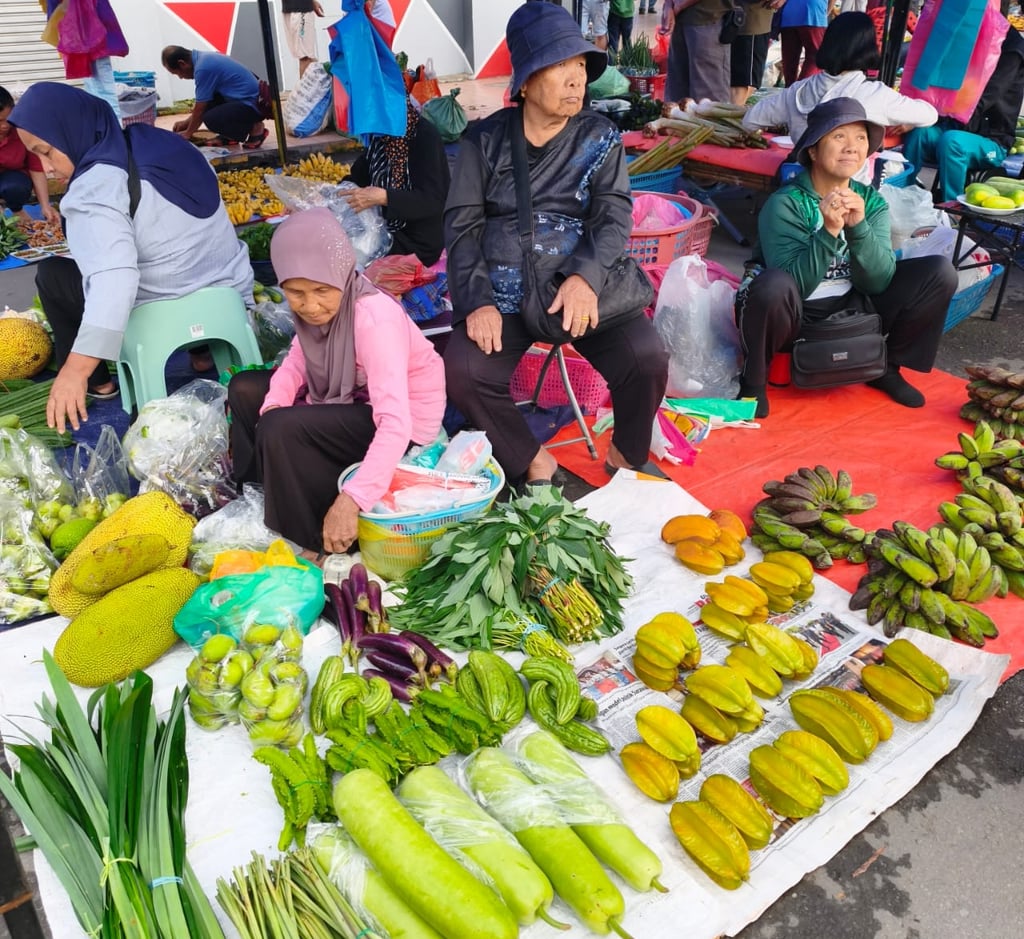
Today, the tamu still exists, though it has learned new dialects. Plastic tarpaulins replace woven shades; motorcycles idle where bare feet once rested. Smartphones glow between stalls. Yet beneath the modern varnish, the old heartbeat persists. A travel account tracing the tamu across decades, finds not a simple before-and-after tale but a layered palimpsest—one time written over another, never fully erased.
The Tamu of the 1970s: Where the World Walked In
Roads Measured by Feet, Not Miles
Inland, people walked for days to reach the tamu. Paths cut through forest and river, measured not by distance but by endurance. Families traveled in small caravans, baskets balanced on backs, children asleep against shoulders. Arrival was announced not by signage but by sound: laughter swelling, roosters protesting, metal scales clinking.
The journey mattered as much as the market itself. Along the way, travelers exchanged news—who had married, who had fallen ill, which crop had failed, which spirit had been angered. By the time they reached the tamu, they carried not only goods but stories, already warmed by retelling.
A Calendar Tied with Knots
Time, then, was not printed. Many communities kept calendars on palm leaves, folding and unfolding them, tying knots to mark the passing weeks. The tamu was one such knot—a recurring certainty in an otherwise fluid world. Miss the tamu, and one missed a week of life’s rhythm.
Religion was practiced with devotion, prayers whispered before dawn and offerings placed with care. Yet faith coexisted with fear. Black magic was not superstition but a practical concern, discussed in low voices between stalls. Amulets were sold beside vegetables, protection traded as readily as rice.
Coffee, Smoke, and the Currency of Talk
At the edge of the market, the coffee spot anchored everything. There were no cafés, only benches darkened by years of use. Coffee was thick, almost tar-black, brewed without apology. Men and women lingered over chipped cups, smoking tobacco rolled by hand in dried nipa leaves. The smoke curled upward, carrying gossip with it.
Without Facebook or Instagram, the tamu was the algorithm. News spread face to face, filtered through expression and pause. A raised eyebrow could mean more than a headline. Deals were sealed with handshakes; reputations traveled faster than money.
Trade as Theatre
The market floor was a stage. Vendors called out prices in singsong cadences. Fish glistened on banana leaves; forest produce arrived still smelling of rain. Bargaining was expected, almost ceremonial, ending with laughter or mock outrage.
For an outsider, the 1970s tamu felt exclusive not because it excluded, but because it demanded presence. To understand it, one had to stand in it, sweat in it, listen until the ear learned the local music of speech.
The Modern Tamu: Speed Wrapped Around Tradition
Wheels Replace Soles
Today, few walk for days. Motorcycles and pickup trucks deliver people and produce before sunrise. Roads have shortened distances, compressing time. What once took a week of preparation can now be done between breakfast and lunch.
Yet elders still remember the long walks, and sometimes speak of them with nostalgia, sometimes with relief. Convenience, after all, is not a betrayal; it is a survival strategy.
Screens Among Stalls
Smartphones appear everywhere now—used to calculate prices, photograph goods, or check messages. Social media exists, but it has not killed the tamu. Instead, it has changed its function. The market is no longer the only source of news, but it remains the most trusted.
Online updates lack smell, texture, and tone. At the tamu, one can still read truth in a vendor’s eyes, hear hesitation in a voice. Digital life informs; the tamu confirms.
Coffee Still Binds
Coffee remains central, though styles have diversified. There are thermoses and paper cups, sometimes even branded stalls. But the dark brew survives, as does the tobacco smoke—though increasingly pushed to the edges.
Conversations are shorter, interrupted by calls and alerts, yet they retain depth. Gossip still travels, though faster now, cross-checked against messages received the night before.
Continuities Beneath Change
Faith, Fear, and the Unseen
Religion is more formalized now, sermons amplified by speakers. Fear of black magic has receded but not vanished. It has learned to whisper rather than shout. Protective charms are less visible, yet prayers before trade continue.
The tamu remains a liminal space, where the sacred and the practical meet. People still believe that how one behaves there can shape fortune for the week ahead.
Community as the True Commodity
Goods change—plastic replaces bamboo, packaged snacks edge out homemade—but the core transaction endures: belonging. The tamu is where absences are noticed and returns celebrated.
For the travel journalist, this is the revelation. Markets elsewhere may boast size or variety, but few carry such emotional density. Every stall is a biography; every visit, a reunion.
Then and Now, Side by Side
Slowness Versus Speed
In the 1970s, slowness was not a choice but a condition. Life unfolded at walking pace. Now, speed is abundant, but slowness is curated—found in early hours, in elders’ stories, in the second cup of coffee.
Memory as Infrastructure
What bridges past and present is memory. Older vendors narrate the old tamu to younger ones, pointing out where paths once entered, where people camped overnight. The market’s geography is as much remembered as mapped.
Why the Tamu Still Matters
An Exclusive Access to Time
To visit a tamu today is to gain access not just to products, but to time layered upon itself. The 1970s are not gone; they are embedded, like sediment beneath the present.
For travelers seeking authenticity, the tamu offers something rarer than novelty: continuity. It teaches that progress need not erase, that tradition can adapt without surrendering its soul.
Conclusion: The Market That Refuses to Disappear
The tamu of the 1970s and the tamu of today are not opposites but relatives. One speaks in longer sentences, the other in quicker phrases. Both value presence over performance.
As long as people gather weekly to trade, talk, drink dark coffee, and measure time—whether by palm-leaf knots or phone calendars—the tamu will endure. Not as a relic, but as a living journey, inviting those who arrive to slow down, listen, and become part of its ongoing story.
A Final Note from the Road
The tamu remains one of the last places where the world does not scroll past—it stands still long enough to be known.