Why Safari Drives and River Cruises Give You the Best Wildlife Sightings in Borneo
Discover why safari drives and river cruises offer the highest chance of wildlife sightings in Borneo—explained by local jungle experts.
Lost Borneo Tours
1/18/20263 min read
Why Safari Drives and River Cruises Give You the Best Wildlife Sightings in Borneo
At Lost Borneo Tours, wildlife guiding is not learned from books or television. It comes from decades of local jungle experience—long before tourism, paved roads, or modern equipment existed.
In the 1980s, hunting and forest travel were cultural practices, not adventure activities. From those years, one lesson remains unchanged:
If you want to see wildlife in Borneo, go where the jungle opens — not where it closes.
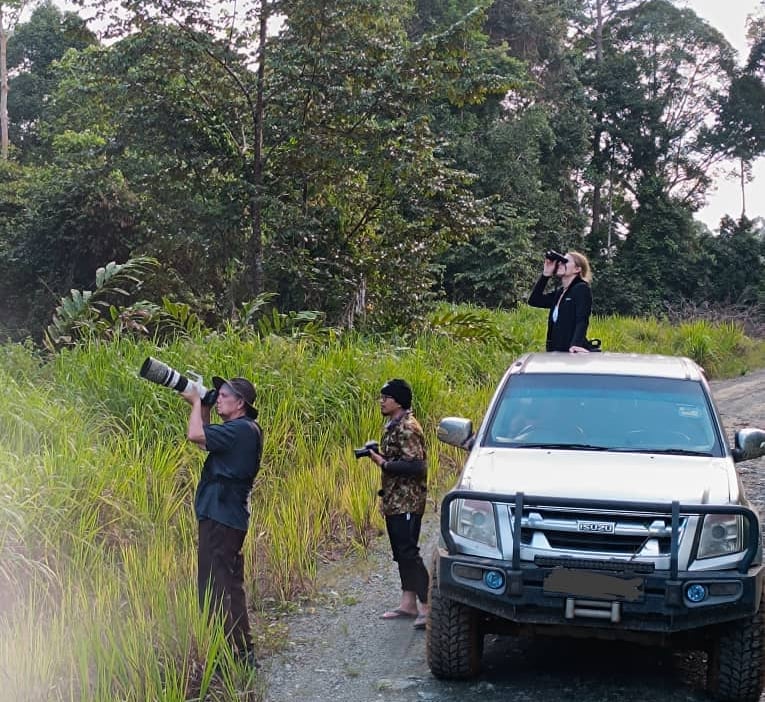
This is why safari drives and river cruises consistently offer the highest chance of wildlife encounters, far more than jungle trekking alone.
A Local Truth — Wildlife Shows Itself in Open Spaces
Borneo’s rainforest is dense, layered, and designed by nature to hide animals perfectly. Inside the jungle, animals see, hear, and smell humans long before humans see them.
The Four Layers of the Rainforest
Emergent layer
Canopy layer
Understory
Forest floor
Most trekking happens deep within the lower layers, where:
Light is limited
Visibility is poor
Animal camouflage works perfectly
This is why trekking often results in sounds without sightings.
Why Wildlife Prefers Forest Edges, Roads, and Rivers
Wildlife does not move randomly. Animals follow:
Food sources
Mating routes
Natural corridors
Open Areas Are Strategic
In Borneo, open areas include:
Riverbanks
Old logging roads
Forest clearings
Salt licks
These spaces allow animals to:
Spot danger early
Communicate during mating
Access fruiting trees efficiently
This is where guides at Lost Borneo Tours focus their efforts.
Mating and Feeding Behaviour Happens Where Visibility Is High
Nature Needs Space
During mating seasons, animals require visibility and movement space. Dense jungle restricts this.
Examples:
Orangutans travel forest edges to reach fruiting trees
Hornbills nest near open flight paths
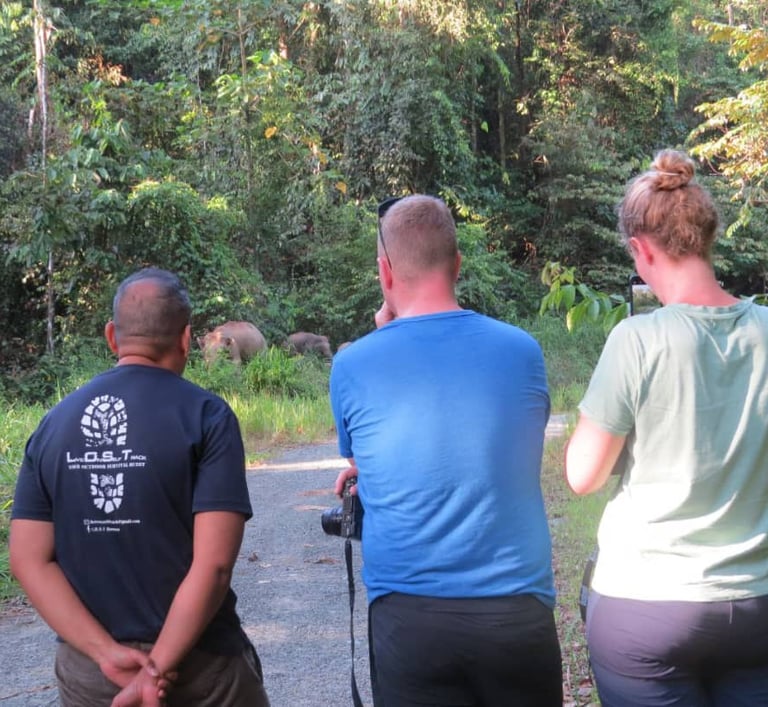
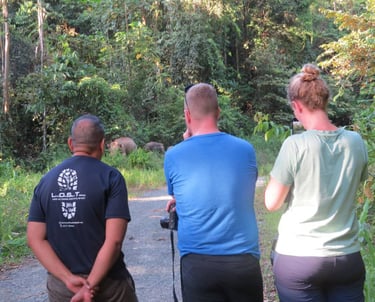
Pygmy elephants use old roads as migration routes
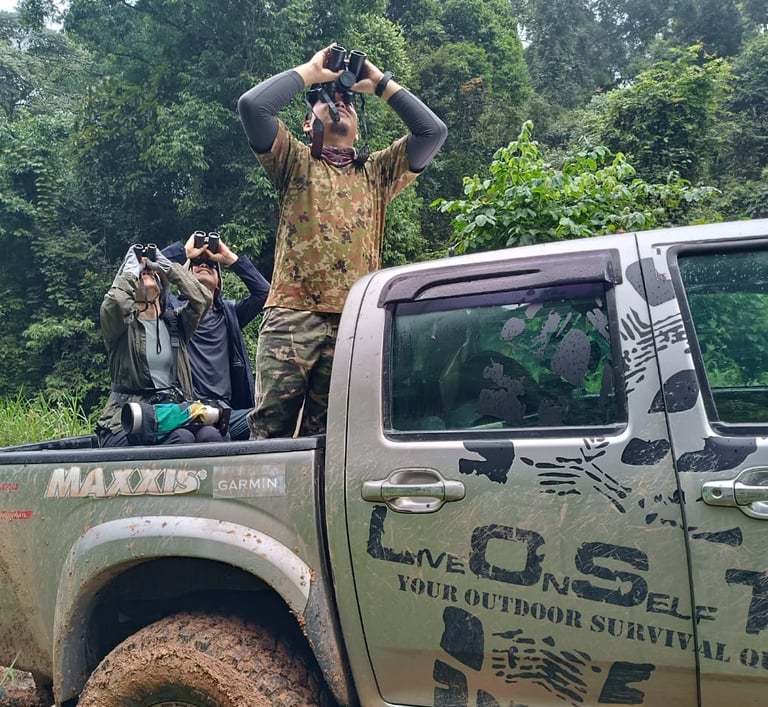
These are the exact places safari vehicles can access.
Fruiting Trees Are Easier to Observe from Safari Routes
Wildlife Follows Food, Not Trails
Fruiting trees often stand near riverbanks or forest edges where sunlight reaches the canopy.
From safari routes:
Guides can spot fruiting cycles early
Guests can wait quietly
Animals arrive naturally
Inside dense jungle, fruiting trees may be invisible even from a few meters away.
Why Jungle Trekking Has Lower Wildlife Success
Trekking feels adventurous—but animals see it differently.
A Walking Human = Danger
For thousands of years:
Humans hunted on foot
Humans carried weapons
Animals evolved to treat upright, walking humans as threats.
Result:
Wildlife retreats silently
You walk past without ever knowing
This is why many trekkers say, “We heard something, but didn’t see anything.”
The National Geographic Illusion
What You See on TV Is Not Real-Time
A 45-minute wildlife documentary may require:
6 months to years of filming
Permanent hides
Weeks of waiting for seconds of action
Filmmakers don’t chase wildlife. They let wildlife come to them.
Tourists often expect the same results in a single jungle walk—which is unrealistic.
Why Safari Vehicles Work So Well
Wildlife Does Not See You as a Human
Animals perceive safari vehicles as:
Neutral moving objects
Part of the environment
Non-predatory
Because of this:
Animals remain visible longer
Natural behaviour continues
Stress is reduced
This is ethical wildlife viewing at its best.
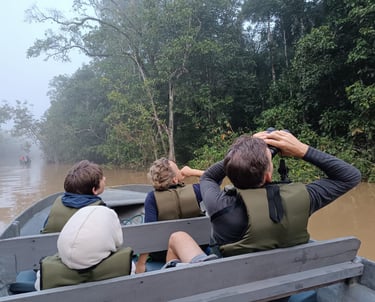
River Cruises — The Ultimate Wildlife Advantage
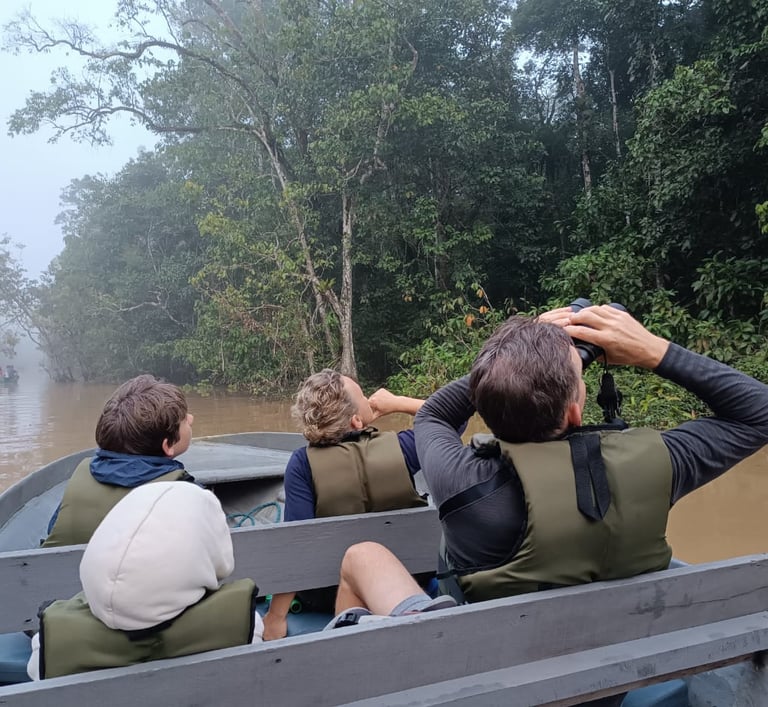
Rivers Are Wildlife Highways
Every animal needs water. Rivers are:
Feeding zones
Travel corridors
Social meeting points
From a boat:
Sound is less alarming
Human scent disperses
Movement is smooth and predictable
Wildlife often ignores boats completely.
“Not Fully Human” — Why Animals Tolerate Boats and Vehicles
Shape and Movement Matter
Human silhouette = threat
Human inside vehicle or boat = neutral
This is why:
Orangutans continue feeding
Elephants cross roads calmly
Birds stay perched longer
Old Jungle Knowledge, Modern Conservation
At Lost Borneo Tours, safari and river-based wildlife viewing follows the same logic used by local hunters decades ago:
Observe
Wait
Do not disturb
Today, that knowledge supports conservation, not hunting.
The Honest Conclusion About Wildlife in Borneo
Borneo is not a zoo. It does not perform on demand. And it does not reward rushing.
The Best Wildlife Encounters Come to Those Who Sit and Watch
Safari drives and river cruises succeed because:
Wildlife prefers open spaces
Animals feel less threatened
Visibility is higher
Behaviour remains natural
In Borneo, you don’t chase wildlife.
You let the jungle come to you.